MMDD 102 – Motion & The World Around Us
April 7, 2024 7:50 pm Leave your thoughtsWeek 5 – Motion in the World Around Us
Art Direction
An art director, takes conceptual ideas from a client or creative director and executes. They take ideas and make them happen by moving projects through the development phases, going from an idea, to the rough, all the way through to the final production phases. Art directors rely on their technical skills to turn a concept into a finished product.
An art director can work with many different form of media from websites, print, magazines, ad campaigns, news papers, photo shoots or any other visual media. When a concept is made an art director will take it and make it.
What does an art director do?
- How to present concepts visually
- Selecting photos, art, visuals, color schemes to use
- Develop over all style
- Manage and supervise designers
- Review and approve designs from team
- Communicate with clients
- Develop budgets and timelines
Storyboards
What is a storyboard?
A story board is a series of diagrams that shows a sequence of graphics. This series of graphics can show what will happen over a timeline such as an animation. It can also not be fixed if the storyboard is for interactive media like a video game for example.
What is the purpose?
The purpose of a story board is to plan out how a composition will play out. It is created before the finished product and used to illustrate how a story will play or show changes of scenes over time or in the case of interactive media how scenes will change depending on user input (Think the Fallout series of games. Or, think changes to aUI over time and how the UX will flow and funnel the user to some conclusion).
Linear Storyboard use:
- Film/movies
- Video Ads
- Audio Visual Sequence
- Multimedia presentations
- Animation
- Comics
Non Linear Storyboard use:
- Interactive Media
- Info displays
- Video games
- Phone Apps/DApps
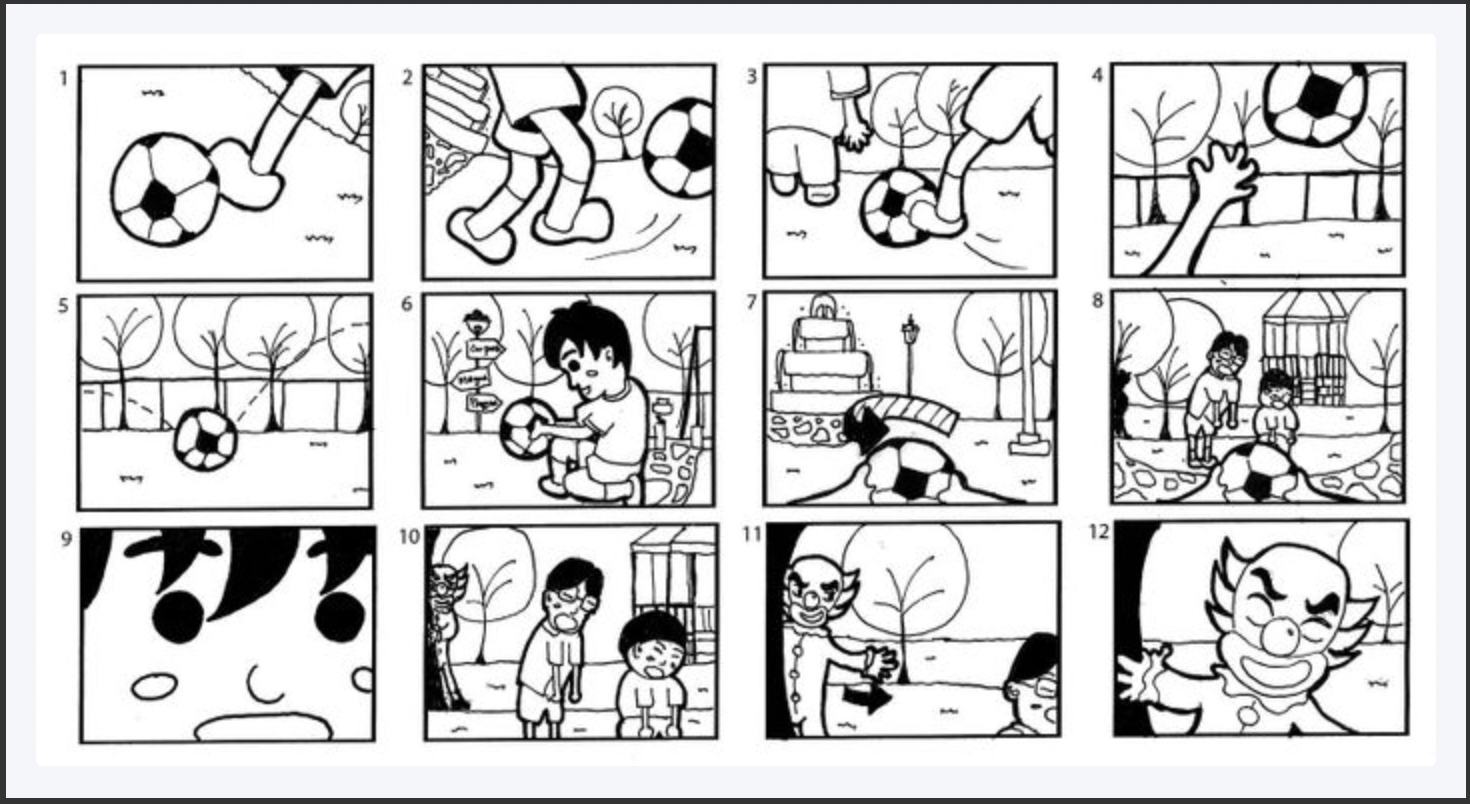
Storyboard Example:
Blank Storyboard:
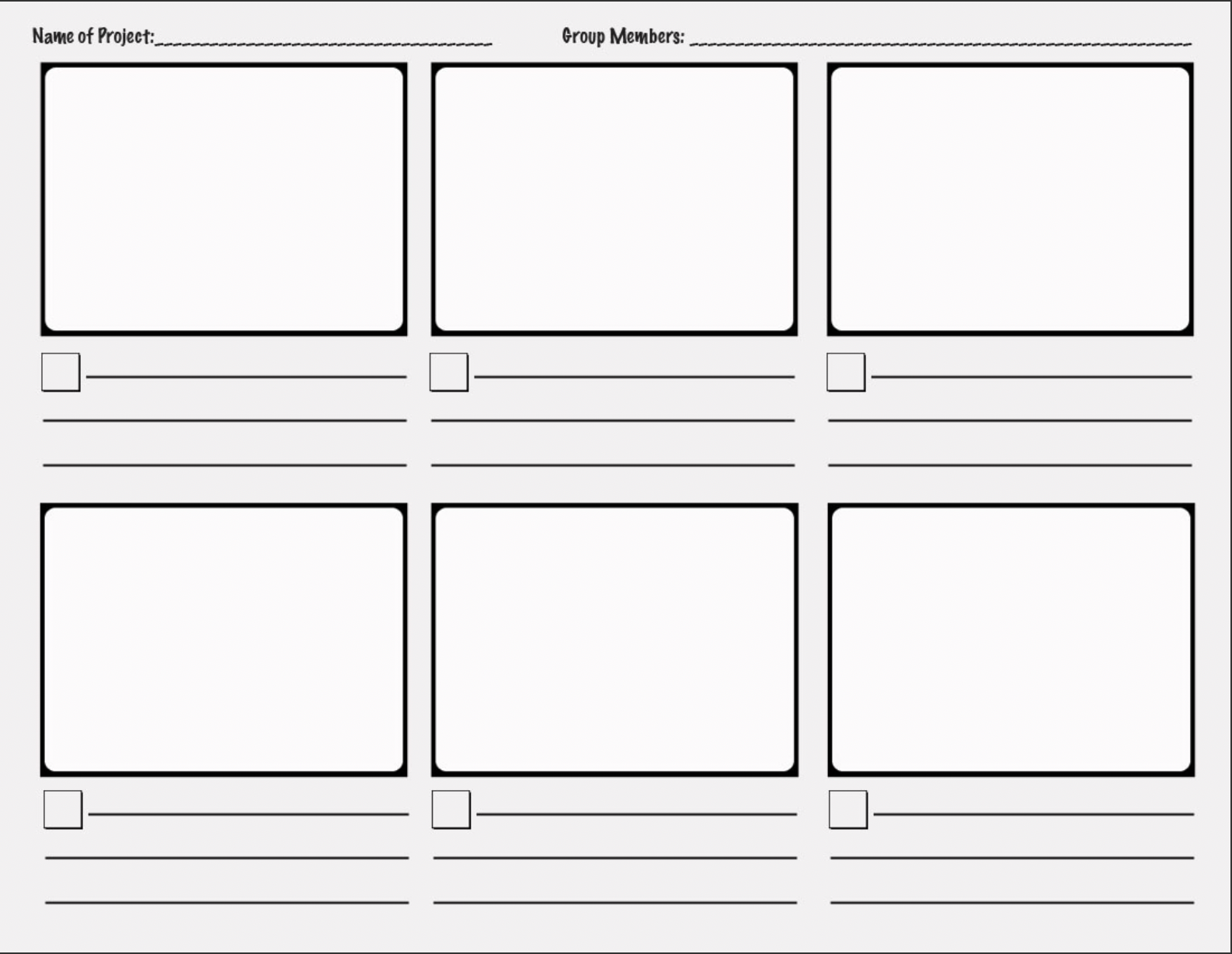
Name of Project: __________________ Group Members: __________________
A common way to produce a storyboard is to use a template. This can start with a template file like a .doc or a .pdf file for example. The length of the storyboard will depend on the type of product you are creating. A film for example will be detailed and longer. A small composition would be shorter and more to the point.
Making up storyboards
- To make a story board, start with/make a template.
https://www.google.com/search?q=free+storyboard+template…
You can get a free template to work with. - Under each rectangle write the line of the script dialog that corresponds with the the scene that will be drawn in.
- Draw the scene. Dont worry if you are not good at drawing, it does not have to look like a piece of art. Simple stick figures will work. You can also use screen shots from After Effects, illustrator or photoshop.
- Add notes, descriptions of whats happening, camera angles, movements, special effects and so on. You can note what music will go in as well.
Style Frames
A style frame conveys what a finished frame of an animation will look like when it’s done. The client or team can then approve if it before continuing the project. This can also be different variants of what the finished product could look like so the client or team can choose from different options.
Think, like taking single frame of the rough copy and finishing that one frame to show a still image of what the finished product of the animation could look like.
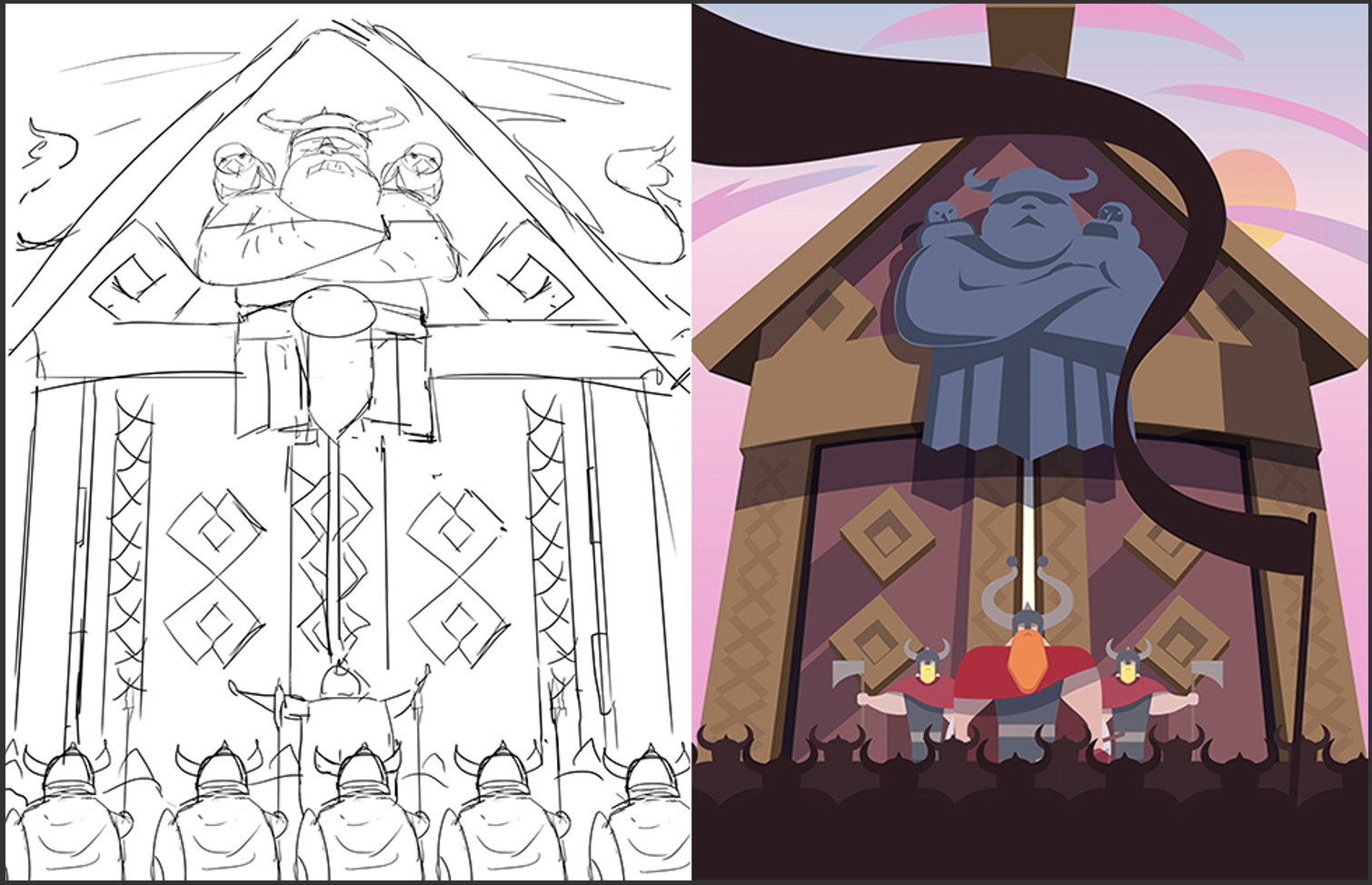
Style frames can capture the colors, textures, photos and assets you plan to use in the video. The aim here is not to show every frame (like the story board) but to convey one or few single frames of the video but as a finished product to give a preview of the finished product.
There are MANY reasons to do this.
One of many is to save time. If you go ahead and add color schemes, polish up the finished product and ship it. What happens if the customer disapproves or wants an iteration? You have to now go back on hours of work and rendering time to then go back and finish the job again, possibly several times.
What deal do you have with the client? Is it on record they must pay for iterations? Many deals can fall apart here, where iteration and time to produce them start.
Are you 100% sure the colors are right? Do the colors match the feel, vibe, story telling, atmosphere, music, feeling that this scene is supposed to have? Does it speak to the audience properly? You may want to try multiple different combinations to get the right fit.
A lot of times clients just plain don’t know what they want. Then they want to run up your time and don’t want to pay for it. YOU have to protect yourself from all sides.
These are just but a few among many more reasons to do this. It just saves yourself time and money. Whilst allowing you to optimize the overall potential of the end result to the best of its ability, while being efficient.
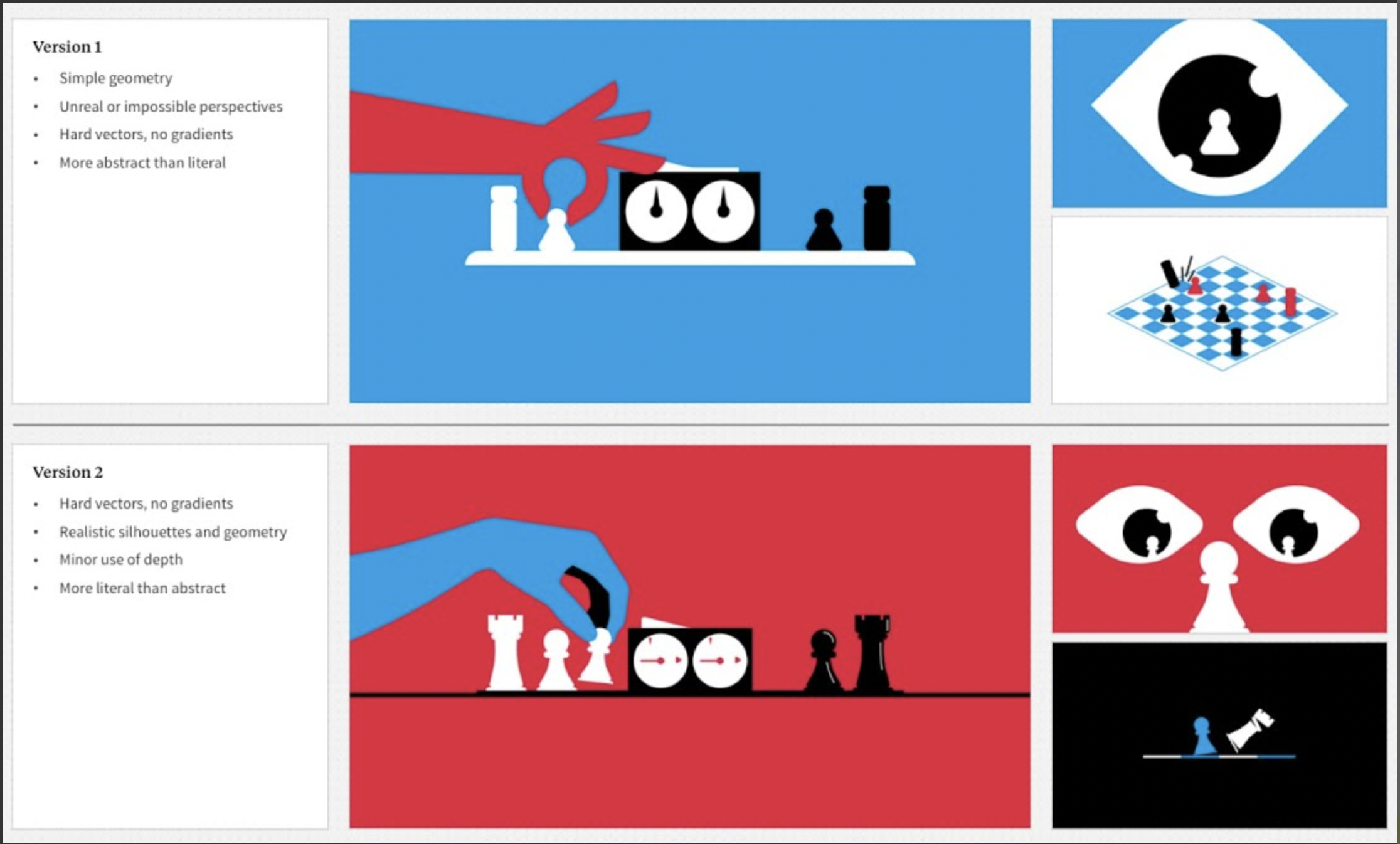
Take a look at the image above. What story does each tell? How does each make you feel? What does each convey? Is this image political? Is it sociological? Is it about business? Game theory? War? Or is it just a simple, friendly game of chess?
What does the blue one speak to you?
What does the red one speak to you?
And why?
Did you pay attention to the small details?
I will bet good Ethereum that the red one has a totally different story to tell you. Rightfully so, and there is a good reason for that.
Version 1
- Simple geometry
- Unreal or impossible perspectives
- Hard vectors, no gradients
- More abstract than literal
Version 2
- Hard vectors, no gradients
- Realistic silhouettes and geometry
- Minor use of depth
- More literal than abstract
Categorised in: Lectures, MMDD 102
This post was written by amax