
iLearnUlearn.org
October 5, 2024 9:32 pmiLearnULearn
Building a Social Network Around Learning
Overview
iLearnULearn was an early social-learning platform built around the idea
that learning did not have to be confined to traditional classrooms.
Co-founded with Nan Keochanh, the project explored how
the emerging social-web model could be applied to education. Instead of
treating learners primarily as passive consumers of courses, iLearnULearn
was designed around communities where people could share knowledge,
teach one another, form learning groups, and pursue subjects based on
their own interests.
The project began on the ELGG social networking platform
before evolving into a CakePHP-based web application as
the project’s requirements and ambitions developed.
At its core, iLearnULearn asked a simple question:
What happens when the social-networking model is applied to learning?
The Concept

Traditional learning platforms were generally structured around
institutions, courses, instructors, and predefined curricula.
iLearnULearn took a different approach.
Users could participate in specialized communities built around
subjects, hobbies, skills, and areas of expertise. Rather than assuming
that learning only happens when an institution provides a course, the
platform treated the community itself as a source of knowledge.
The resulting model brought together several ideas that were becoming
increasingly important on the emerging social web:
- Social networking
- Online communities
- Peer-to-peer learning
- User-generated content
- Educational groups
- Gamification and participation
Rather than simply placing conventional courses online, iLearnULearn
explored how people could create and participate in learning communities
of their own.
Designing Learning as a Social Experience
One of the central ideas behind iLearnULearn was that people already
possess valuable knowledge that can be shared with others.
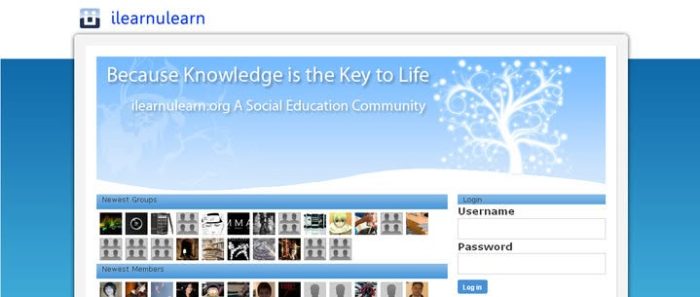
Instead of restricting learning to formal instructors, the platform
allowed communities to form around specialized interests. A person
could potentially move between different roles depending on the subject
and their experience:
Learner → Contributor → Teacher
This made the platform less like a conventional Learning Management
System and more like a social knowledge network.
The distinction was important. The goal was not simply to digitize
existing classroom material. It was to explore a different model for
how educational communities could form, communicate, and exchange
knowledge online.
From Social Network to Learning Platform
The project originally used ELGG, an open-source
social networking framework, as its foundation.
As the project evolved, the platform moved toward
CakePHP, providing greater control over the application’s
architecture and the ability to develop functionality specifically
around the project’s requirements.
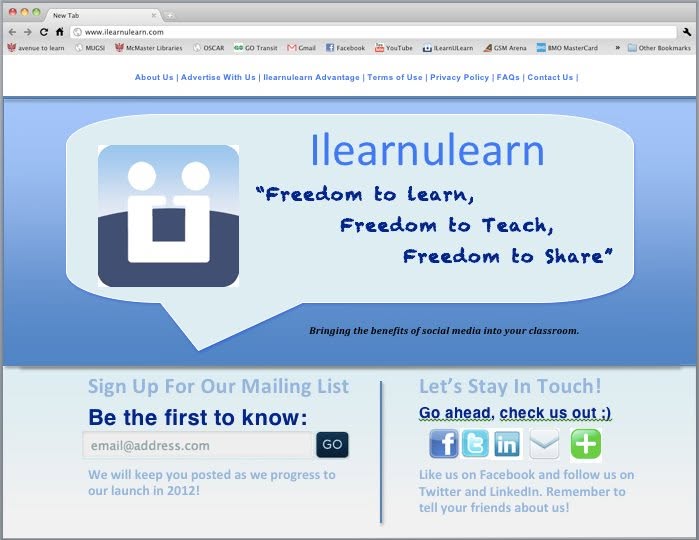
Looking back, this transition represents one of the realities of
developing a digital product: the technology that makes sense at the
beginning of a project is not necessarily the technology that makes
sense as the product becomes more ambitious.
Working through that transition provided experience with the realities
of developing a product rather than simply developing an individual
website.
Gamification and Participation
iLearnULearn also incorporated gamification concepts intended to
encourage participation within the community.
Users could accumulate activity points and receive recognition through
rewards, trophies, and other forms of acknowledgement.
The underlying idea was to make participation itself meaningful and to
encourage users to contribute to the community rather than simply
consume information.
This created an early exploration of a design problem that remains
relevant to digital products today:
How do you motivate users to contribute useful content
and return to a community over time?
Beyond Consumer Education
The underlying platform concepts were not limited to hobby and
community learning.

The architecture and concept could also be applied to documentation,
training, and knowledge-sharing environments, creating possibilities
for organizations to provide users with product documentation,
educational resources, and training materials.
This expanded the concept beyond a consumer-facing social learning
network toward a broader platform for organizational
knowledge-sharing and training.
My Role
I was a Co-Founder, Vice President and C.O.O. of
iLearnULearn, working alongside my friend and co-founder
Nan Keochanh, who served as President.
My responsibilities extended across product development, technology,
operations, design, and the broader development of the project as a
digital product.
My involvement included thinking about:
- Product architecture
- Web application development
- User experience
- Social interaction and community design
- Educational models
- Technology selection and platform evolution
- Business and product strategy
- Operations and organizational development
- Communicating the concept to potential users and partners
I was also responsible for the project’s logo and visual
identity, along with the visual materials used to present
and promote the platform.
While the visual design was only one part of my responsibilities, it
was an important part of creating a recognizable identity for the
project and communicating what iLearnULearn was intended to become.
Building a Digital Product
One of the most significant aspects of iLearnULearn was that it
required thinking beyond the development of a website.
We were attempting to create a functioning digital product, establish
a community around it, determine how people would use it, and
communicate the concept to people outside the development team.
That meant working across the boundaries of technology, design,
education, entrepreneurship, and community development.
The experience became an early example of the kind of interdisciplinary
work that has continued throughout my career: combining technology
with design and communication to create digital experiences around
the way people interact with information.
Project Archive
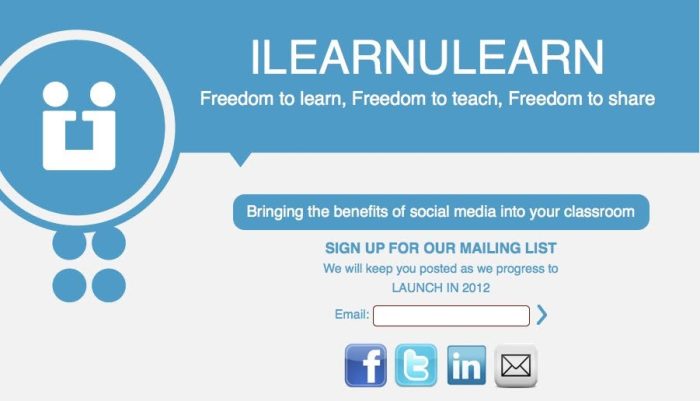
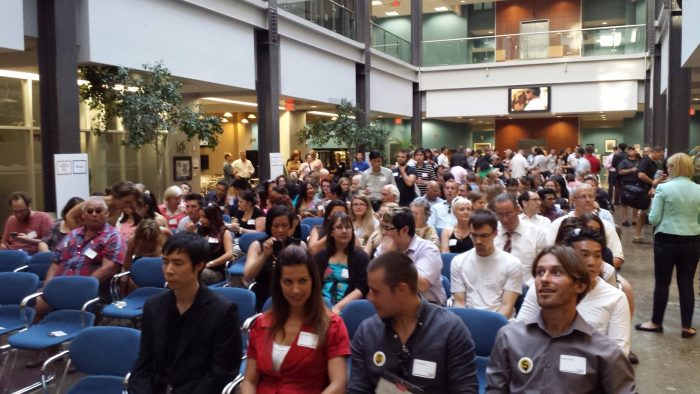
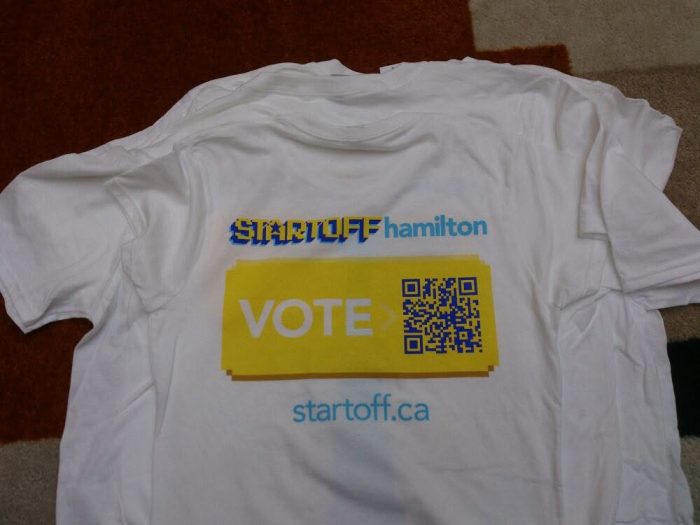
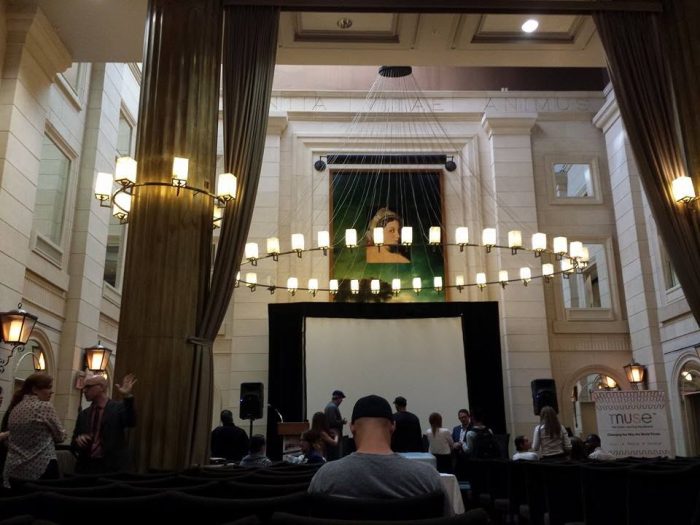
Although iLearnULearn is no longer an active platform, a number of
artifacts from the project have survived, including archived
screenshots, social-media material, the original logo and visual
assets, photographs from events and conventions, and portions of the
original project and CMS files.
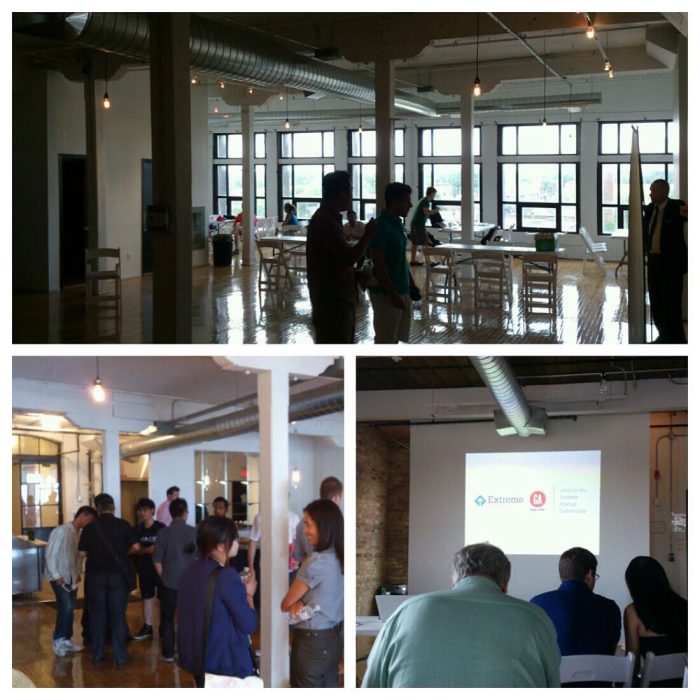
These materials provide a record of both the product itself and the
development process behind it.
The original application does not need to be restored for these
artifacts to remain useful. Together, they provide a historical
record of the product’s interface, technology, branding, and the
people involved in developing it.

Reflection
Looking back at iLearnULearn years later, what stands out most is how
much of the project was an attempt to understand what education could
look like as social technologies became more prevalent.
The project was developed during a period when social networking was
fundamentally changing the way people communicated and shared
information online. We were interested in applying those same
principles to learning.
That experience shaped my understanding of digital media as something
larger than a collection of technologies. A successful digital
experience requires consideration of the technology, the interface,
the community, the user’s motivation, and the larger system in which
all of those elements operate.
iLearnULearn was an early opportunity to work across all of those
areas at once.
Categorised in: Portfolio
This post was written by amax
Comments are closed here.